
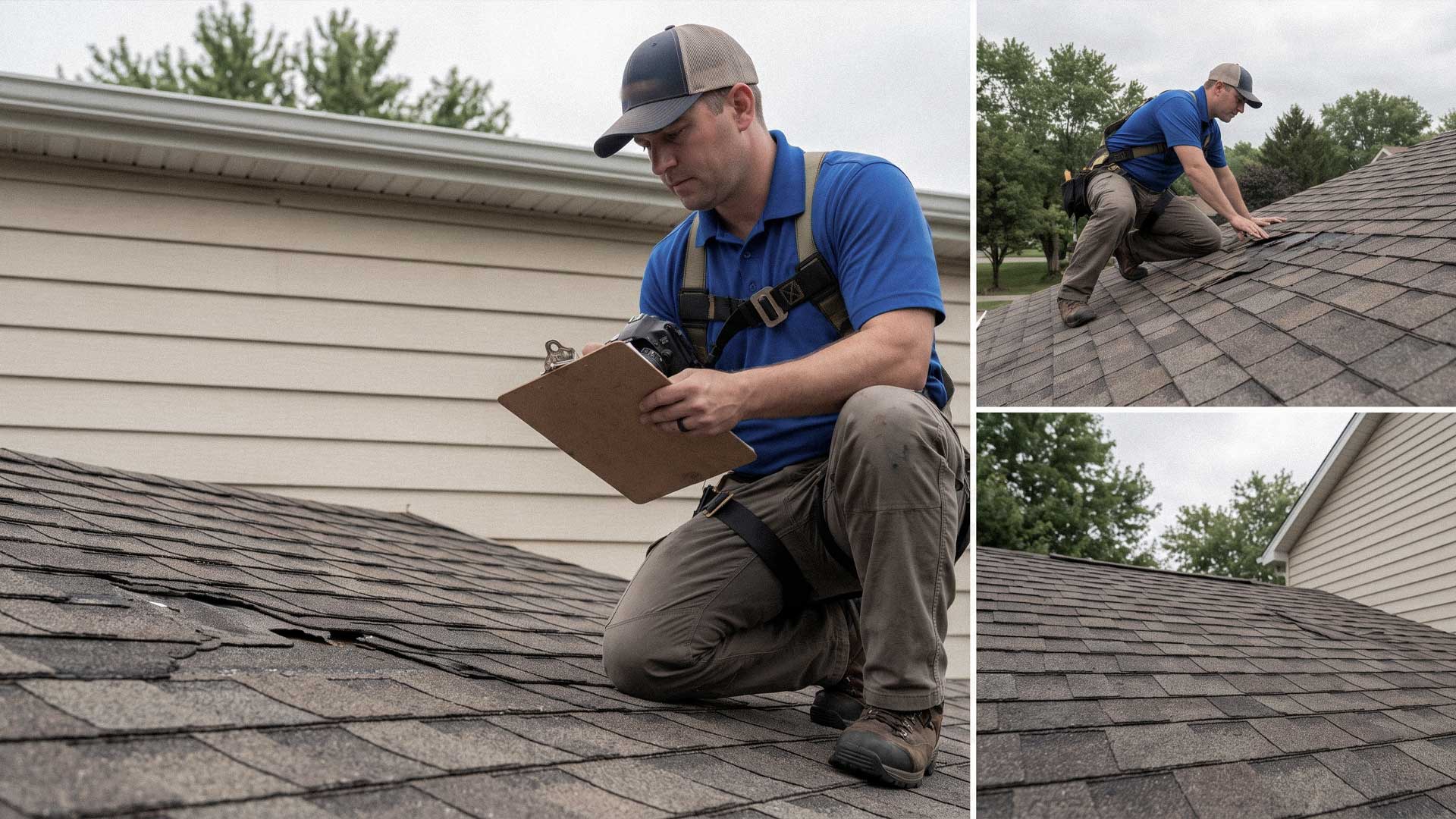
Severe weather can develop quickly throughout the Delaware Valley, bringing heavy rainfall, strong wind gusts, lightning, hail, falling branches, and localized flooding. While your roof is your home’s first line of defense, extreme weather can also affect siding, gutters, windows, doors, soffits, fascia, porches, and other exterior components.
With storms moving through our area today, Sheppard Exteriors encourages homeowners to put safety first and understand what to look for once conditions improve.
How Extreme Weather Can Affect Your Roof
Wind-Lifted or Missing Shingles
Strong wind can loosen shingles, lift their edges, break seals, and remove shingles entirely. Even when a roof looks intact from the ground, wind may have weakened individual shingles or exposed fasteners and underlayment.
Watch for:
• Missing, curled, lifted, or uneven shingles
• Shingle pieces in the yard
• Exposed areas of the roof
• Loose flashing around chimneys, skylights, and vents
• New water stains on ceilings or walls
Wind-Driven Rain
Rain does not always fall straight down during a storm. Strong wind can push water beneath shingles, behind siding, around windows, and through vulnerable flashing.
Water may enter in one location and travel along roof decking, framing, or insulation before becoming visible inside the home. A ceiling stain may therefore appear some distance from the actual point of entry.
Hail and Flying Debris
Hail, branches, and windblown debris can damage shingles, dent gutters, crack siding, loosen flashing, and break windows or exterior trim. Some impact damage is difficult to recognize without a professional inspection.
How Severe Weather Affects the Rest of Your Exterior
Siding, Soffits, and Fascia
Strong wind can loosen siding panels, separate seams, damage corner posts, and pull soffit or fascia material away from the home. Openings in these areas may allow rain, insects, or animals to enter.
After the storm, look for:
• Loose or missing siding
• Cracks, dents, or punctures
• Panels that appear bowed or separated
• Hanging soffit or fascia
• Pieces of exterior material in the yard
Gutters and Downspouts
Heavy rain can overwhelm clogged or damaged gutters. When water cannot drain properly, it may overflow near the foundation, run behind fascia boards, damage landscaping, or collect around basement walls.
Check for:
• Gutters pulling away from the roofline
• Sagging or separated gutter sections
• Clogged downspouts
• Water pooling near the foundation
• Overflow marks on siding or fascia
• Downspouts that no longer direct water away from the home
Windows and Doors
Wind-driven rain may reveal weaknesses around windows and doors. Damaged seals, loose flashing, cracked caulking, and shifting exterior trim can allow moisture to enter.
Check window frames, door frames, and nearby interior walls for dampness, staining, peeling paint, or unusual drafts.
Porches, Fencing, and Exterior Structures
Decking, porch roofs, railings, fencing, sheds, and exterior structures can also be affected by saturated soil and strong winds. Look for leaning posts, loose railings, shifted panels, fallen limbs, or signs that a structure has moved.
What Homeowners Should Do During the Storm
Your safety is more important than inspecting your property.
• Stay indoors and away from windows.
• Follow National Weather Service and local emergency alerts.
• Do not climb onto your roof during rain, lightning, or strong winds.
• Avoid standing beneath damaged trees, power lines, gutters, or loose building materials.
• Move valuables away from an active interior leak when it is safe to do so.
• Place a container beneath dripping water, but do not touch wet electrical fixtures.
What to Do After the Storm
Once conditions are safe, walk around your property and inspect it from ground level.
Take photographs or video of visible damage, including the roofline, siding, gutters, windows, doors, fencing, fallen branches, and any interior water staining. Make a note of when the storm occurred and when the damage was discovered.
The National Roofing Contractors Association recommends assessing storm damage from the ground rather than attempting to climb onto or repair the roof yourself. A closer evaluation should be completed by a qualified roofing professional.
Contact a professional when you notice:
• Missing, lifted, or damaged shingles
• Active leaks or ceiling stains
• Loose flashing or roof vents
• Damaged siding, soffits, or fascia
• Gutters separating from the home
• Fallen branches on the roof
• Water entering around windows or doors
• Exterior damage that may allow additional water intrusion
Even minor storm damage can become more serious when it is left exposed to additional rain and changing temperatures.
Be Careful of Storm-Chasing Contractors
Severe storms sometimes bring unfamiliar contractors into affected neighborhoods. Before authorizing work, verify the contractor’s identity, insurance coverage, local presence, written estimate, and warranty information.
Avoid signing documents you do not understand or allowing anyone to pressure you into making an immediate decision. Your insurance provider determines coverage—not the contractor.
Sheppard Exteriors Is Here to Help
Sheppard Exteriors provides professional roofing and exterior services throughout Philadelphia, Bucks, Montgomery, Delaware, and Chester counties, as well as surrounding communities in New Jersey and Delaware.
Our team can evaluate your roof and exterior, document visible concerns, explain the condition of your property, and recommend appropriate repairs when needed.
Following severe weather, an informed inspection can help identify damage before the next storm turns a small vulnerability into a larger problem.
https://www.sheppardexteriors.com/weather-radar.php
Never climb onto a wet or storm-damaged roof.
To request an exterior or roofing evaluation, contact Sheppard Exteriors at (215) 557-4444.
Sheppard Exteriors
Roofing – Siding - Windows – Doors - Gutters - Porches And Fencing
Protecting homes throughout the Delaware Valley.